UX Leadership at Swapp
Product foundations for Swapp’s transition from service to SaaS

swapp.ai
•
2024
Swapp.ai is an AI-powered platform for the architecture industry that automates construction documentation and BIM modeling according to each firm’s standards.
Overview
When I joined Swapp.ai, the company was operating as a service-provider for architectural firms. The strategic goal was to pivot into a self-service SaaS platform, reducing operational friction and enabling clients to manage their own projects independently.
My role was to act as the strategic counterpart to the VP of Product, turning high-level roadmap objectives into executable user experiences while establishing the foundational design infrastructure necessary for a scalable product.
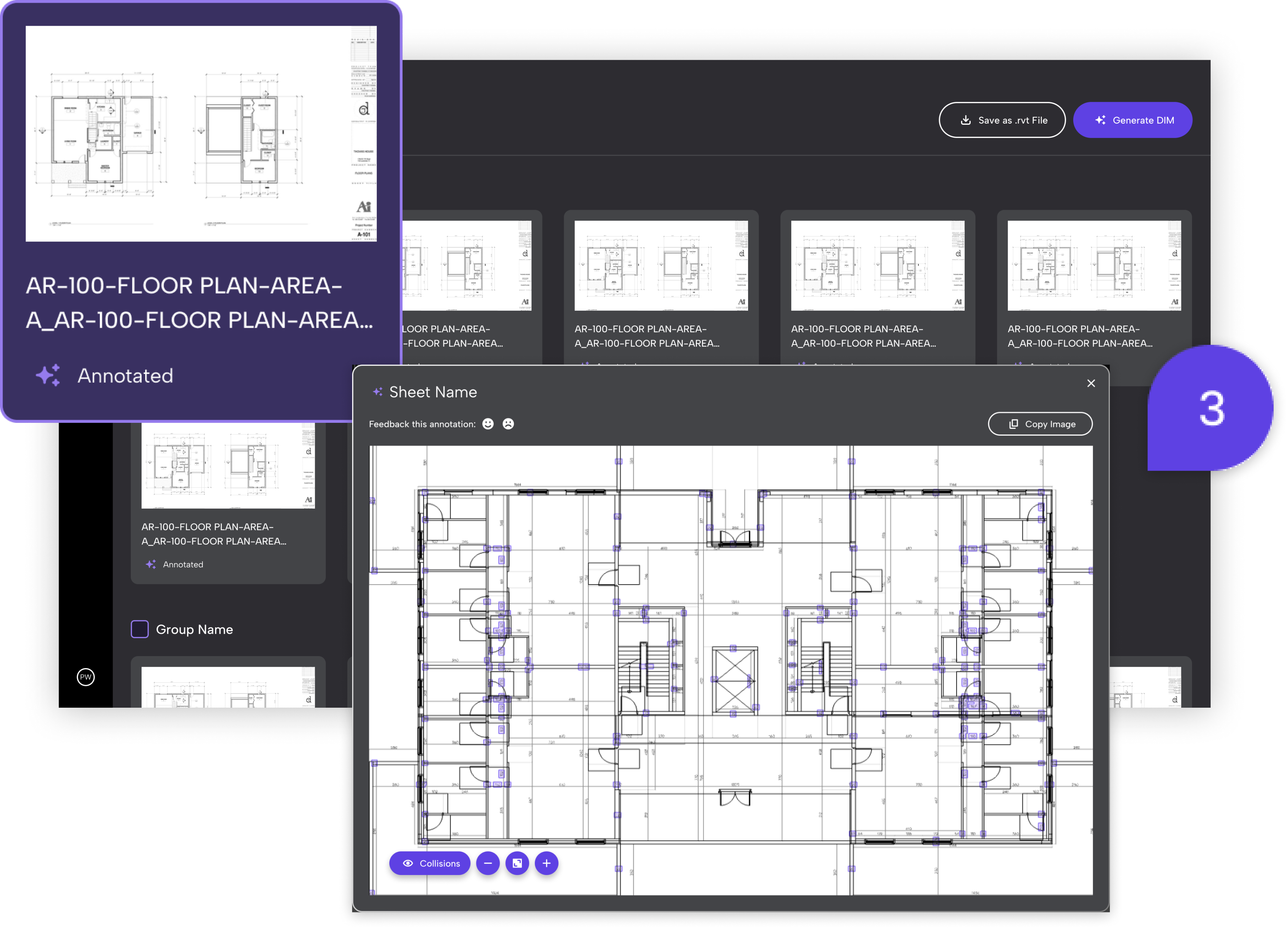
My role
Stepping in as Swapp's first-ever UX lead within a tight-knit 40-person startup, I had close contact with every profession in the company, starting from product and going on to dev and customer success. My work was structured around two core pillars:
Product Vision
Acting as the strategic partner to the VP of Product, helping to manifest business and product goals into real user experience.
Hands-On Design & Mentorship
Driving the delivery of core UI, while mentoring a second designer to scale our product execution.
Product foundations
Establish the Foundation
To transition Swapp’s service-based offering into a self-service product, I first translated the existing workflow into a digital flow. I mapped how work moved between clients, account managers and the production team, then defined the core hierarchy. This became the foundation for navigation and an MVP designed to expand with future features.
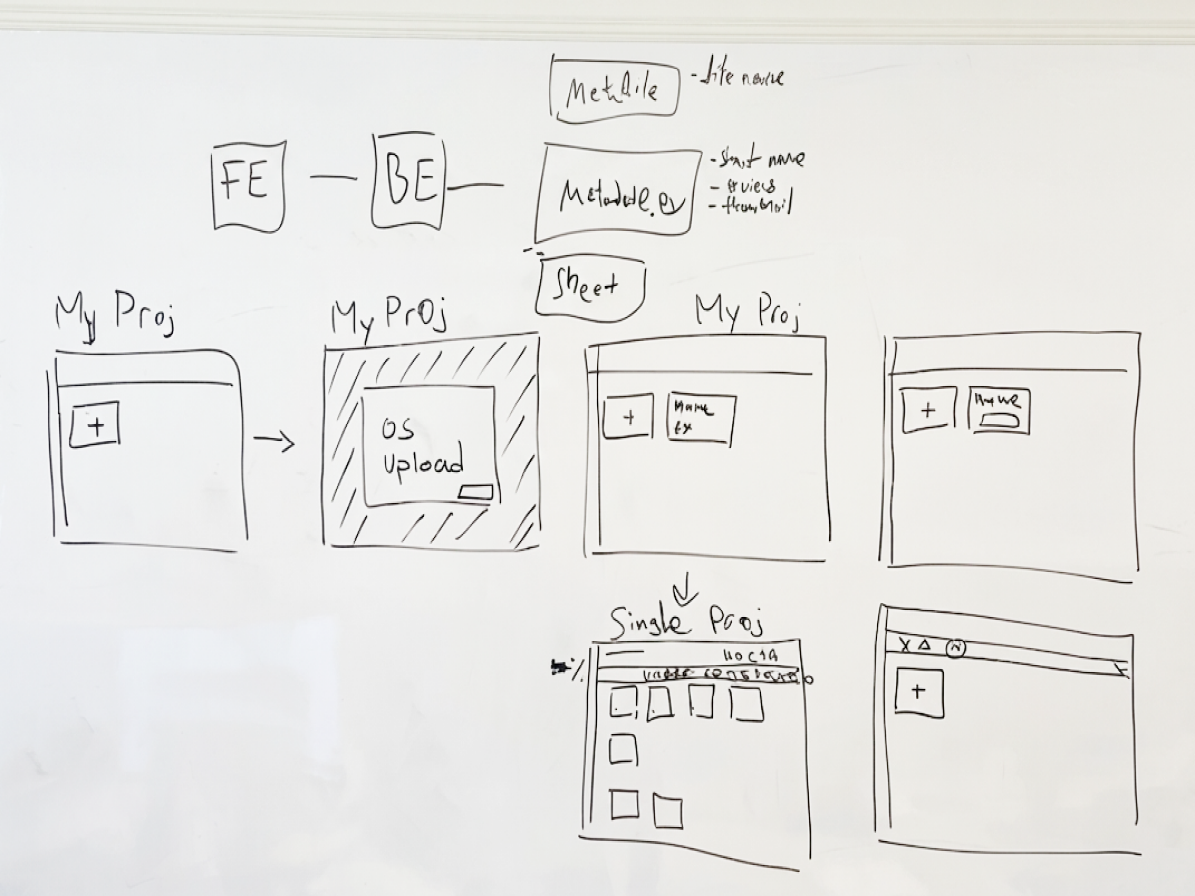
Firm onboarding
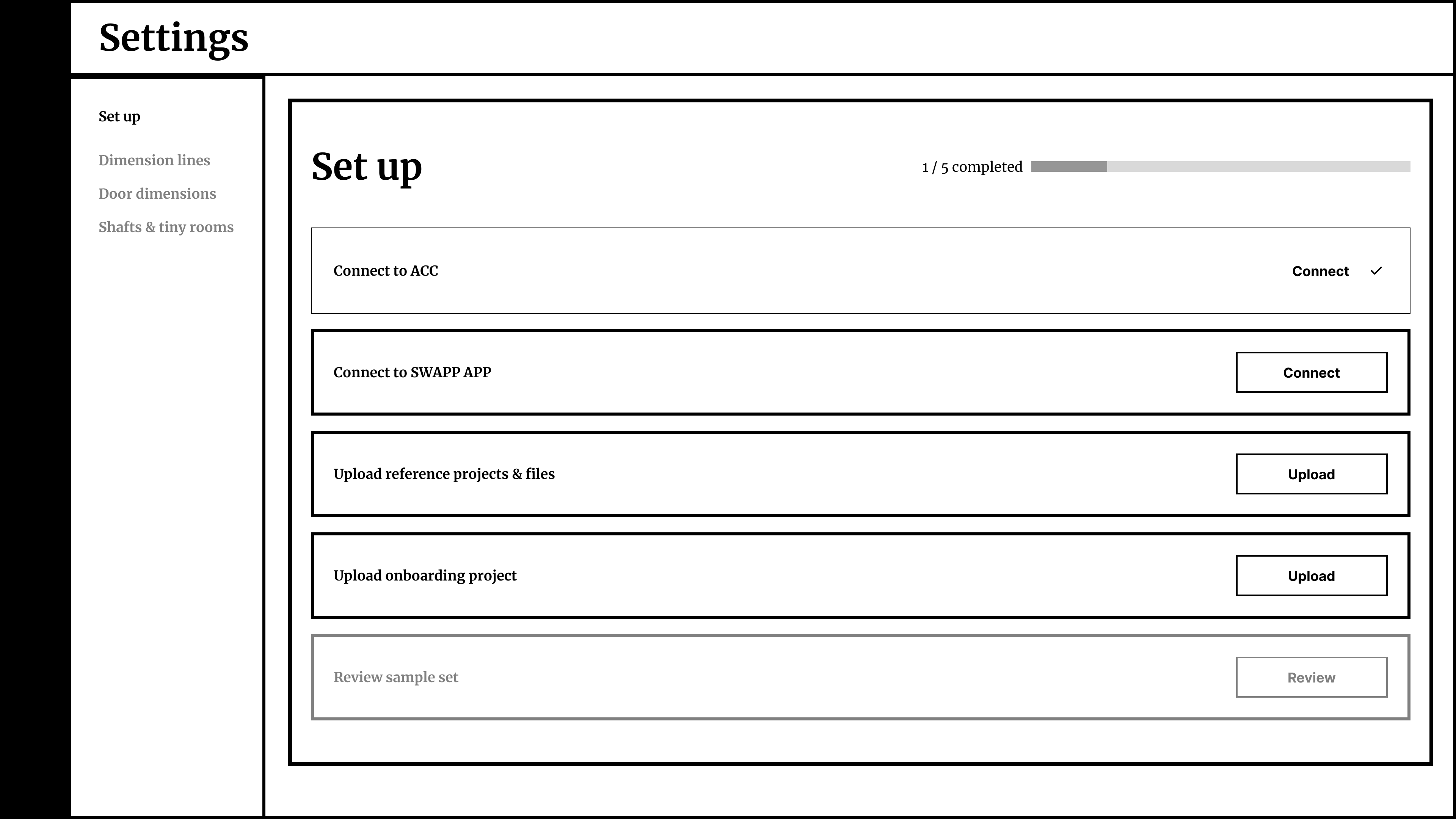
Architectural firms need to upload their documentations and set their preferences to get value out of swapp system

Project & Sheets
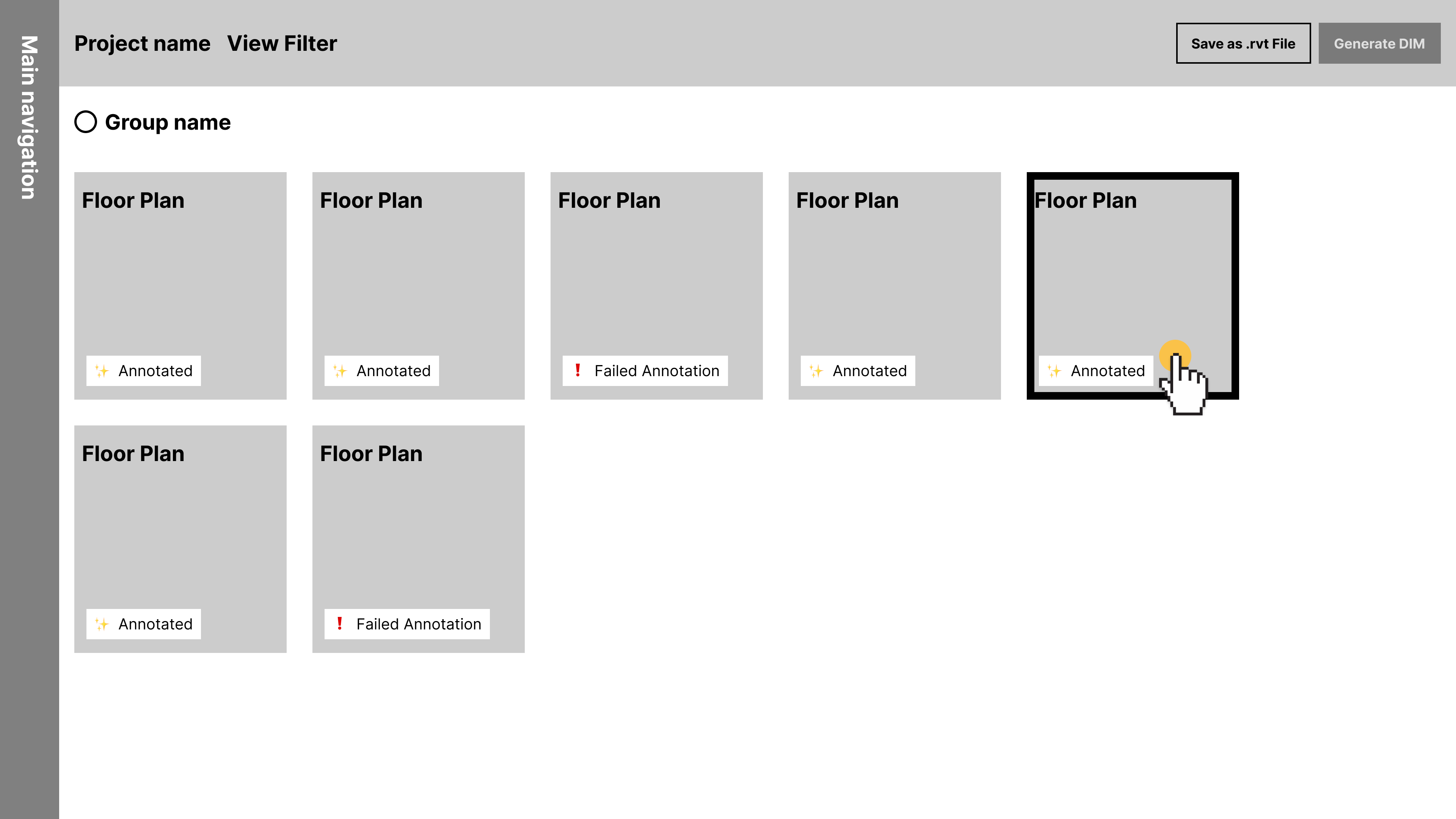
Each architectural project has a hierarchy made of sheets to view and navigate between.
Action
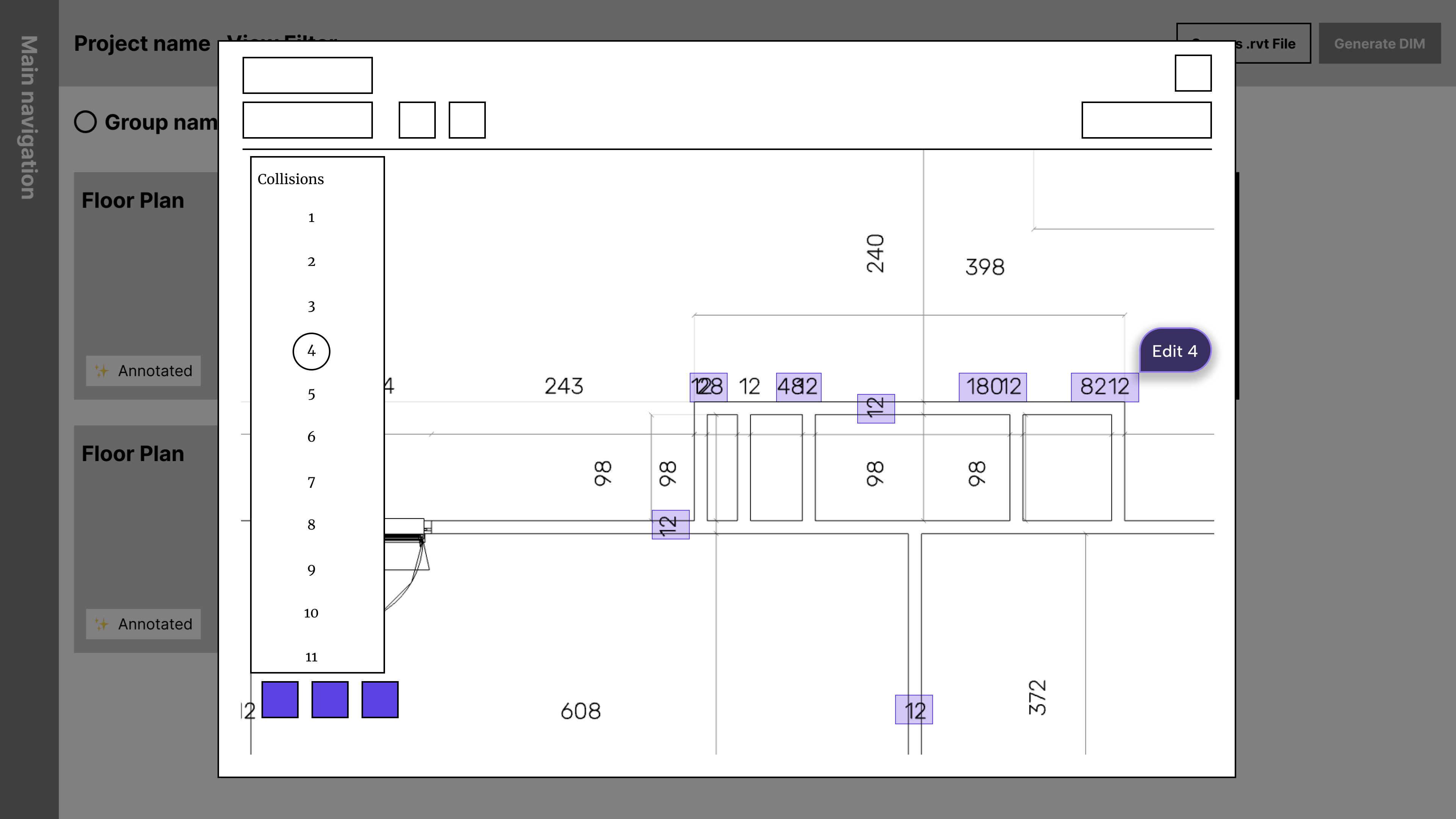
Users choose the action for the system to perform, then review the result, with editing planned for future releases.
Build a Design System
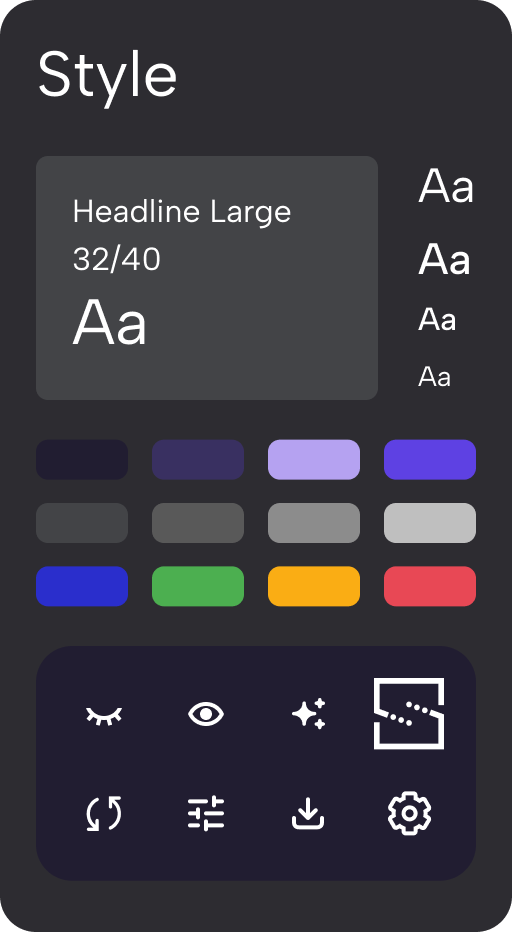
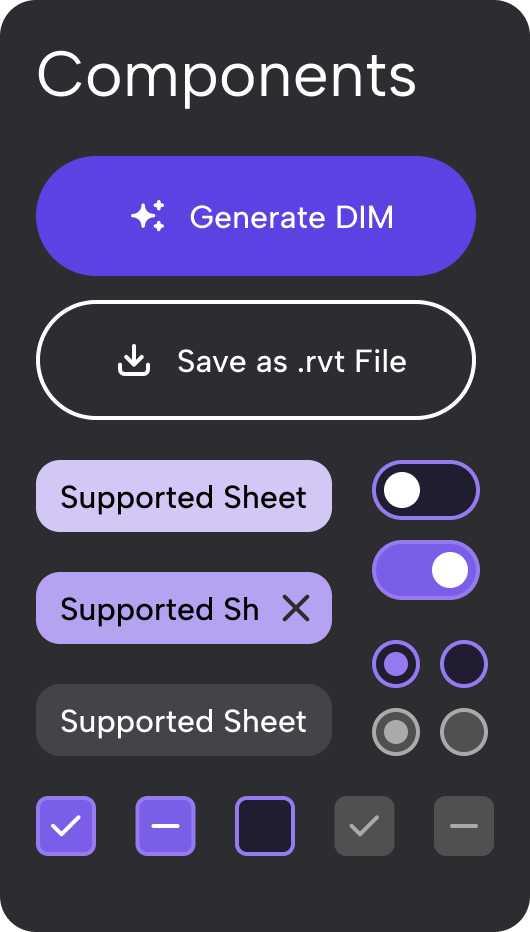
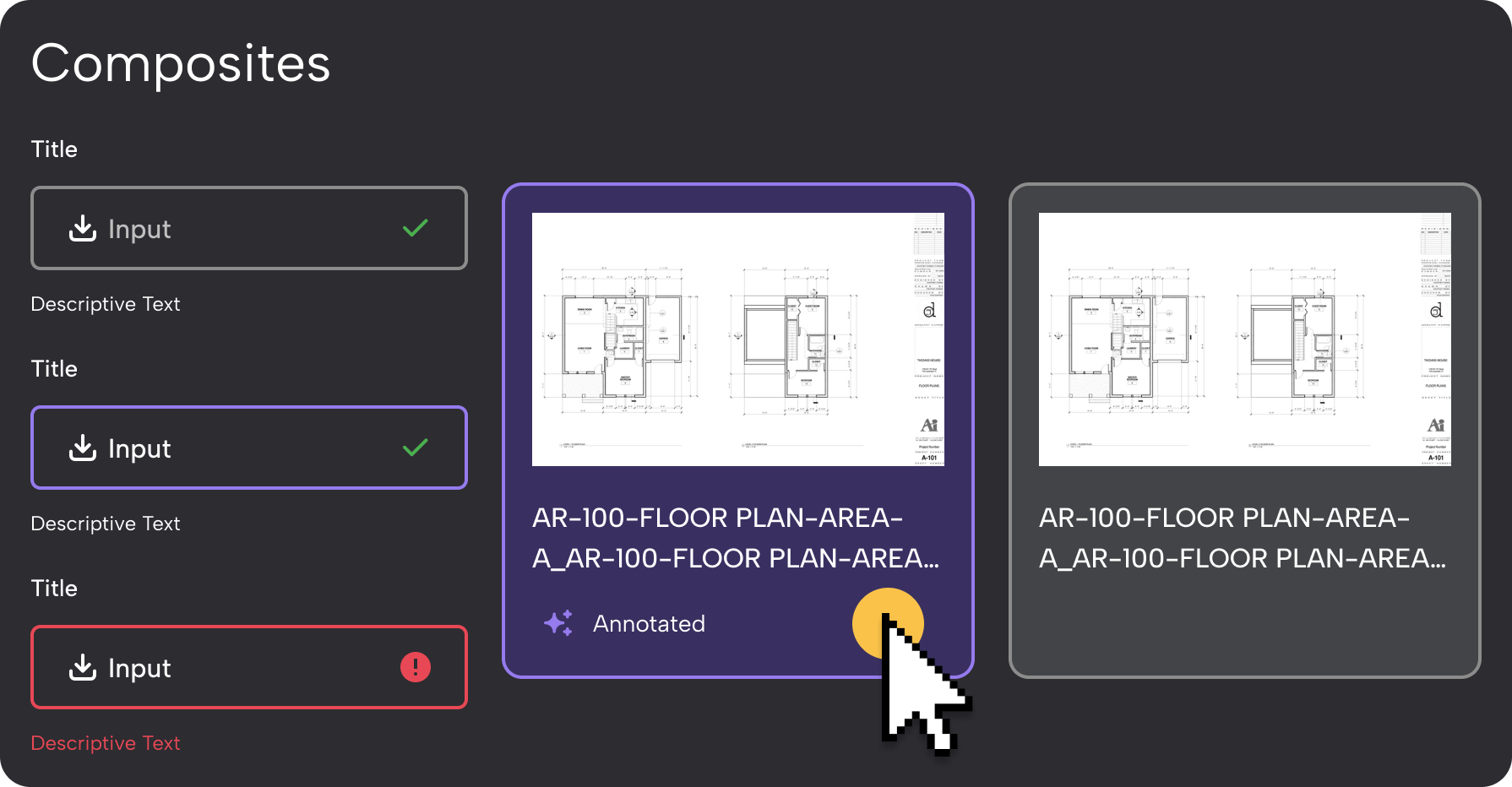
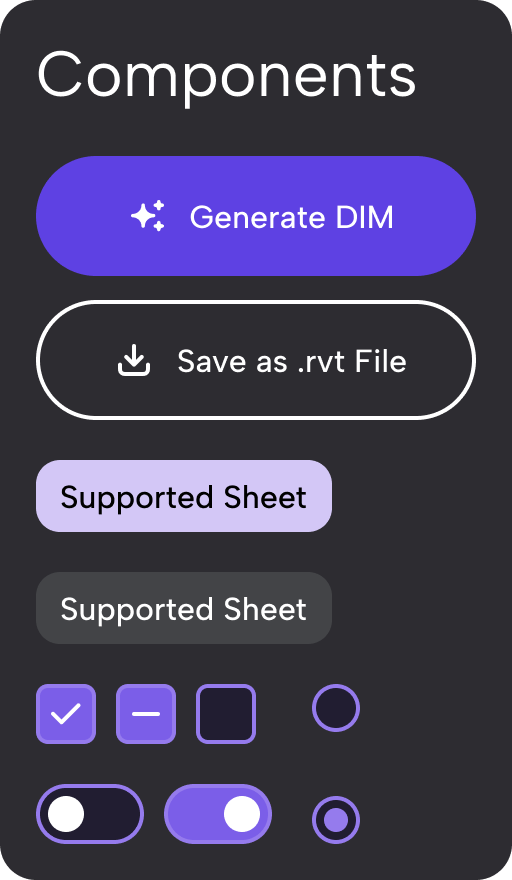
As Swapp added more flows, a full design system became essential for scaling consistently. I built on the existing branding, creating a surface hierarchy that kept architectural sheets visually dominant and reserved color for changes and attention. This helped me define the components and patterns needed to support the growing product.
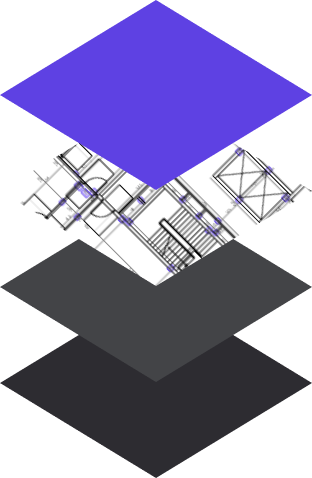
Accent color
Construction sheet
Surface
Background
Impact
Redesigning the sheet experience
- The challenge was to deliver value before full editing capabilities were available. Users had to review the AI-generated work and fix errors manually outside the platform.
- User interviews showed that reviewing results was a core task, but the existing experience did not support it well.
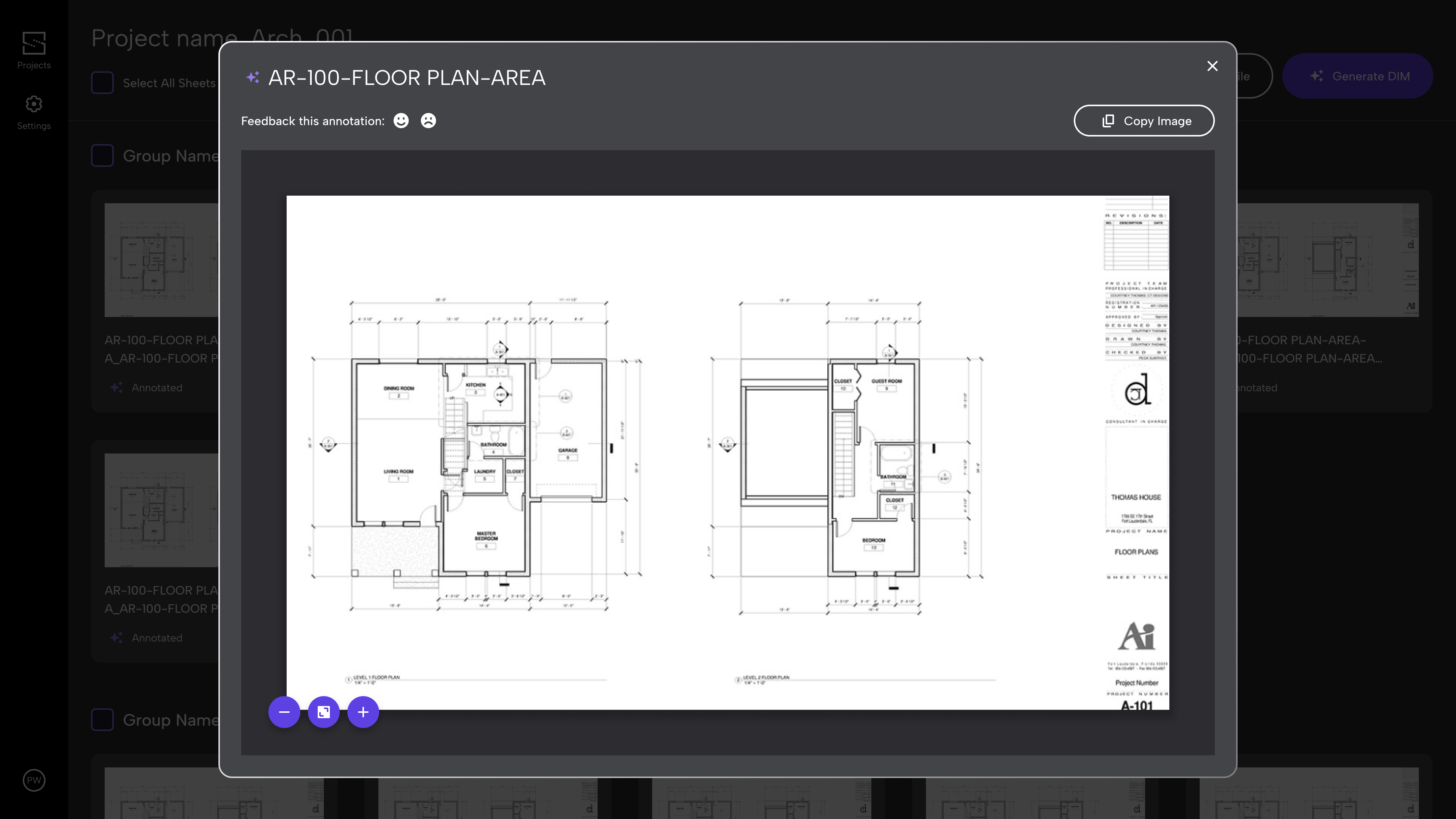
Old Sheet view modal
🥸
User’s feedback
Limited view canvas
🥸
User’s feedback
Navigation between sheets requires closing and opening the overlay multiple times
🥸
User’s feedback
Hard to detect where the interest area is when in full zoom out
New Sheet view full page
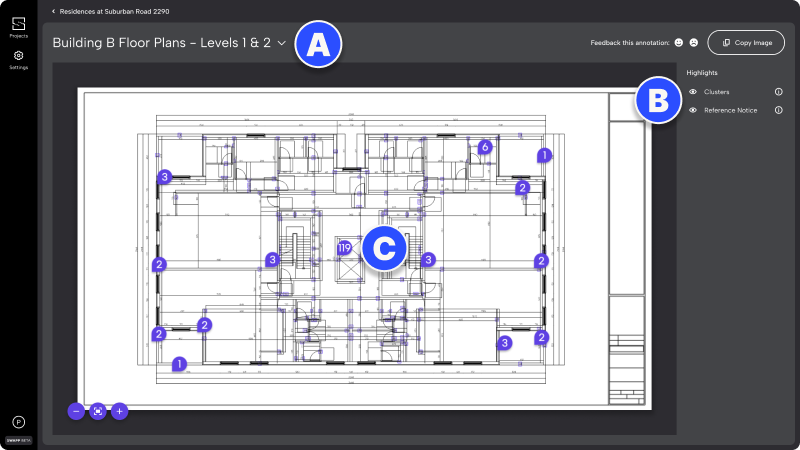
Using the product hierarchy I had already defined, I positioned the sheet as a dedicated workspace and moved it from a temporary overlay to a full-page experience.
A
Sheet navigation
Integrated direct navigation within sheet full page to eliminate tedious open&close modal.
B
Filters
Empowered users to easily view what matters to them.
C
clustersGrouped overlapping annotations into smart clusters when zoomed out to eliminate visual noise.
Onboarding firm
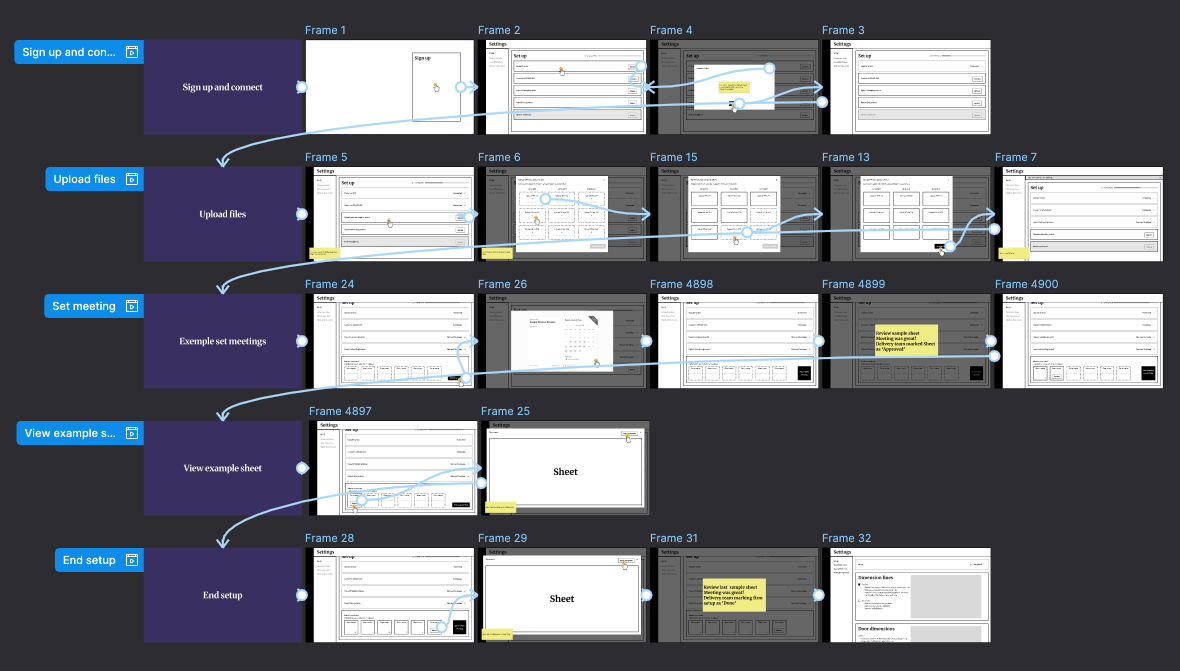
- The challenge was to turn a complex, face-to-face client onboarding process into a clear self-service setup for new firms. I designed a wireframe flow that reduced cognitive load while keeping both the client and Swapp aligned.
- Supported asynchronous progress
- Separated user and Swapp actions
- Showed progress over time
- Provided information essential for project completion
The work remained at wireframe stage and was not completed after the company shifted its product focus.
My take away
At Swapp, I learned how to bridge product strategy, UX, and implementation. My work turned a complex architectural service into a coherent product model. I applied that model across detailed workflows and future self-service onboarding.
Although the SaaS effort was later discontinued, the experience taught me how to be a key contributor in a fast-paced startup, working closely with major stakeholders and delivering user value while the product was still evolving.
#
user-voice
#
0-to-1
#
design-system
#
B2B
UX Leadership at Swapp
Product foundations for Swapp’s transition from service to SaaS
swapp.ai
•
2024
Swapp.ai is an AI-powered platform for the architecture industry that automates construction documentation and BIM modeling according to each firm’s standards.
Overview
When I joined Swapp.ai, the company was operating as a service-provider for architectural firms. The strategic goal was to pivot into a self-service SaaS platform, reducing operational friction and enabling clients to manage their own projects independently.
My role was to act as the strategic counterpart to the VP of Product, turning high-level roadmap objectives into executable user experiences while establishing the foundational design infrastructure necessary for a scalable product.
My role
Stepping in as Swapp's first-ever UX lead within a tight-knit 40-person startup, I had close contact with every profession in the company, starting from product and going on to dev and customer success. My work was structured around two core pillars:
Product Vision
Acting as the strategic partner to the VP of Product, helping to manifest business and product goals into real user experience.
Hands-On Design & Mentorship
Driving the delivery of core UI, while mentoring a second designer to scale our product execution.
Product foundations
Establish the Foundation
To transition Swapp’s service-based offering into a self-service product, I first translated the existing workflow into a digital flow. I mapped how work moved between clients, account managers and the production team, then defined the core hierarchy. This became the foundation for navigation and an MVP designed to expand with future features.
Firm onboarding
Architectural firms need to upload their documentations and set their preferences to get value out of swapp system

Project & Sheets
Each architectural project has a hierarchy made of sheets to view and navigate between.
Action
Users choose the action for the system to perform, then review the result, with editing planned for future releases.
Build a Design System
As Swapp added more flows, a full design system became essential for scaling consistently. I built on the existing branding, creating a surface hierarchy that kept architectural sheets visually dominant and reserved color for changes and attention. This helped me define the components and patterns needed to support the growing product.
Accent color
Construction sheet
Surface
Background
Impact
Redesigning the sheet experience
- The challenge was to deliver value before full editing capabilities were available. Users had to review the AI-generated work and fix errors manually outside the platform.
- User interviews showed that reviewing results was a core task, but the existing experience did not support it well.
Old Sheet view modal
🥸
User’s feedback
Limited view canvas
🥸
User’s feedback
Navigation between sheets requires closing and opening the overlay multiple times
🥸
User’s feedback
Hard to detect where the interest area is when in full zoom out
New Sheet view full page
Using the product hierarchy I had already defined, I positioned the sheet as a dedicated workspace and moved it from a temporary overlay to a full-page experience.
A
Sheet navigation
Integrated direct navigation within sheet full page to eliminate tedious open&close modal.
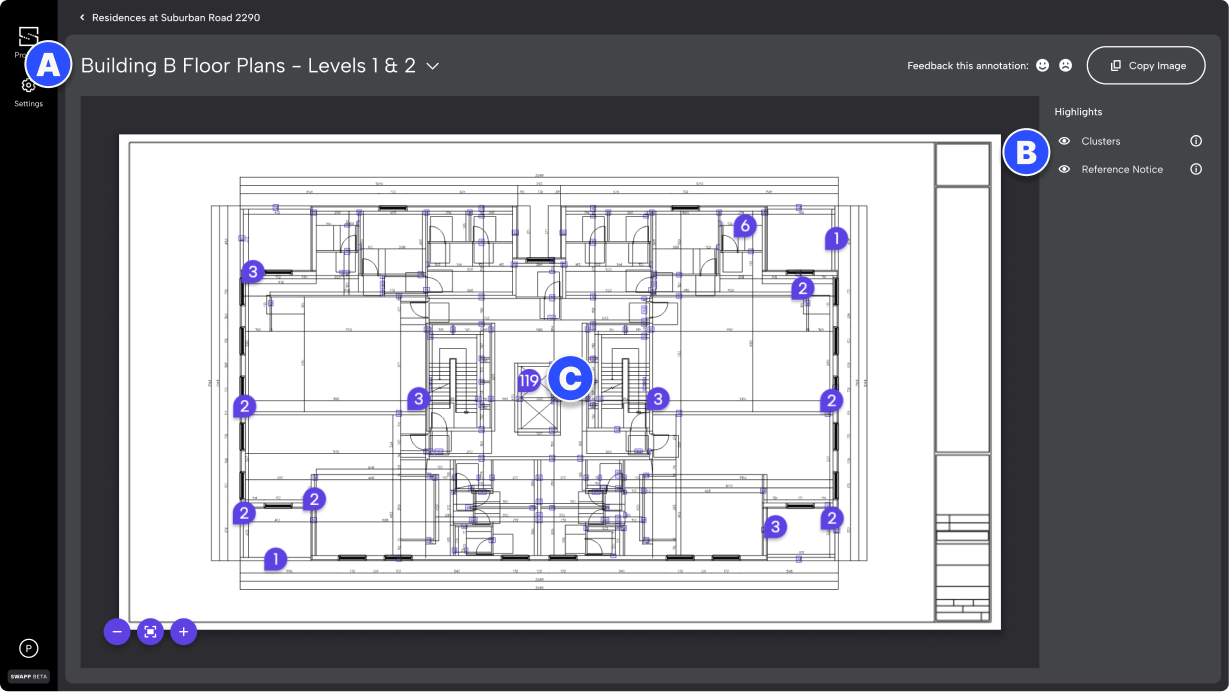
C
clustersGrouped overlapping annotations into smart clusters when zoomed out to eliminate visual noise.
B
Filters
Empowered users to easily view what matters to them.
Onboarding firm
- The challenge was to turn a complex, face-to-face client onboarding process into a clear self-service setup for new firms. I designed a wireframe flow that reduced cognitive load while keeping both the client and Swapp aligned.
- Supported asynchronous progress
- Separated user and Swapp actions
- Showed progress over time
- Provided information essential for project completion
The work remained at wireframe stage and was not completed after the company shifted its product focus.
My take away
At Swapp, I learned how to bridge product strategy, UX, and implementation. My work turned a complex architectural service into a coherent product model. I applied that model across detailed workflows and future self-service onboarding.
Although the SaaS effort was later discontinued, the experience taught me how to be a key contributor in a fast-paced startup, working closely with major stakeholders and delivering user value while the product was still evolving.
#
user-voice
#
0-to-1
#
design-system
#
B2B